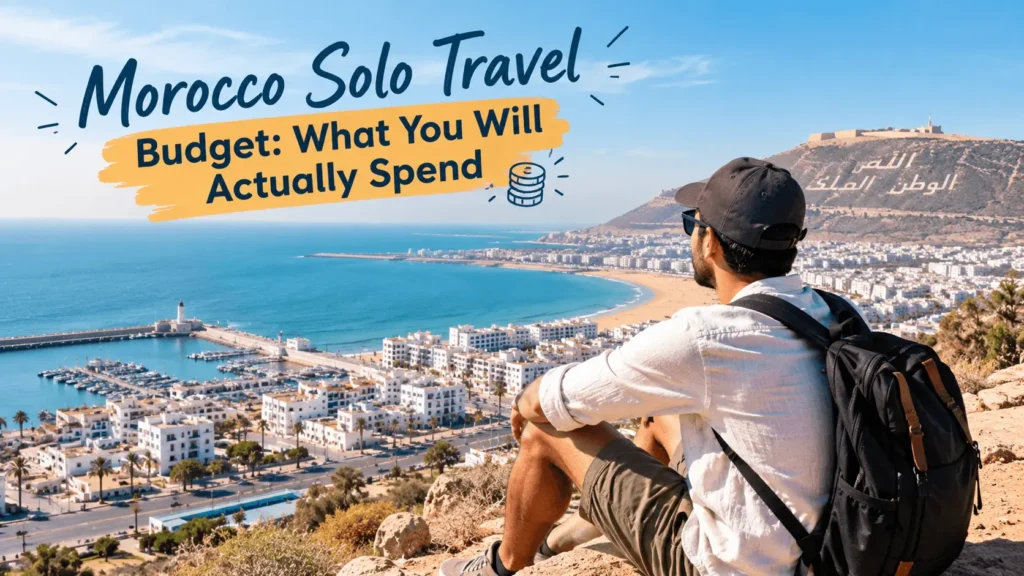
Morocco Solo Travel Budget: What You Will Actually Spend
A question which we are frequently asked is simply how much money you should allocate for a solo visit to Morocco. It’s a reasonable question since general advice that says ‘Morocco is cheap’ isn’t very helpful when you’re trying to plan a real trip. Let’s therefore look at this in more detail, using up-to-date prices rather than outdated figures copied from earlier articles.
The Short Version
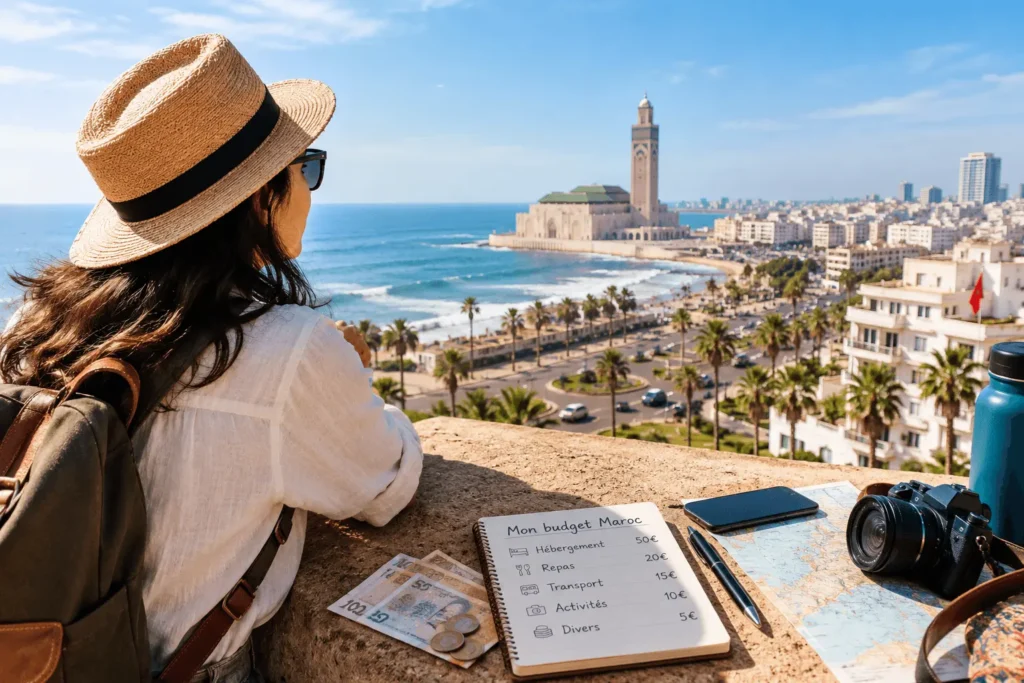
In the majority of the current cost breakdowns there is a general agreement that budget travelers manage with about 30 to 50 dollars each day, mid-range travelers spend between 70 and 150 dollars a day, and those who travel comfortably or in a luxury style spend 200 dollars a day or more. As a very approximate guide to the currency, one US dollar is equivalent to about ten Moroccan dirhams, meaning that a day costing 500 dirhams is about 50 dollars. The figures included cover accommodation, food, local transport and a reasonable number of activities, although they do not include international flights and travel insurance.
Accommodation
Individual travellers have a wide choice in this regard. A bed in a hostel dormitory or a basic budget riad usually costs between 10 and 35 dollars per night, morning meals often being included. Riads in the mid-range category, featuring more character, a courtyard, and a more favourable location, are generally priced between 40 and 80 dollars per night. Boutique riads with rooftop pools and full services are more expensive in this respect, yet they are still fairly reasonable when compared to similar accommodations in Europe. Prices do vary according to the season, since in spring and autumn the rates are generally higher than during the peak summer period, and prices near the festivals of Eid al Fitr and Eid al Adha can double or triple within a single night, so it’s advisable to book well in advance if your visit falls during one of these times.
A particular point concerning travelers who are on their own is that some riads and tour operators charge a single supplement for rooms that are normally priced for two people, so it is important to check whether the quoted nightly rate is given per room or per person.
Food
Morocco offers real good value here. A tagine or a portion of couscous at a local restaurant—those with plastic chairs and no English menu—typically costs about five dollars, occasionally even less. Harira soup from a street vendor can be had for under a dollar. Mint tea is cheap almost everywhere. As long as you mostly eat at local restaurants and street stalls and only sometimes go to a nicer restaurant, your daily food expenditure will remain low and is often under fifteen dollars a day. Since eating only at the restaurants catering to tourists in the main squares is considerably more expensive, it makes sense to include some visits to local establishments, both in terms of cost and because, honestly, the food is usually better.
Transport
Traveling on your own is one of the main items that varies in cost. The trains running between the major cities—Marrakech, Casablanca, Fes, and Rabat—are comfortable, not expensive and easy to book, especially if you book one or two days in advance. For shorter or less well-connected routes, minibus taxis are more expensive but still reasonable when shared, although the costs can build up if you’re going alone and in effect paying for a full vehicle. In the cities, small taxis are cheap for short journeys, provided that you make sure the meter is working or agree a fare before getting in.
Activities and Tours
The types of experiences that most solo travelers prefer are a guided walk through a medina, a day trip to the Atlas Mountains, or a multi-day tour of the Sahara desert, the cost of these tours depending on the number of people in the group, the standard of comfort and the company offering them. For a solo traveler, choosing a small group tour instead of a fully private one is generally the more worthwhile option when it comes to both financial and social value.
Hidden Costs Worth Building Into Your Budget
First-time visitors are often surprised by a number of minor expenses. Since each ATM withdrawal usually involves a charge of about 20 to 40 dirhams, it is more economical to make fewer, larger withdrawals rather than many small ones. Bottled water costs approximately half a dollar to a dollar per litre. It is normal to tip in restaurants as well as when paying guides, drivers, and hotel staff, and it therefore makes sense to plan on spending around 5 to 10 dollars per day on tips throughout the trip. There is also an extra cost for a local SIM or eSIM, although this is only a few dollars for a useful data package.
Putting Together a Daily Budget
A backpacker who travels alone and stays in hostels or budget riads, eats local food, and makes use of public transport can generally manage with between 30 and 50 dollars each day. A mid-range traveller, opting for comfortable guesthouses, eats at a combination of local and better restaurants, and takes part in a few paid activities, will usually spend between 70 and 150 dollars a day. A person travelling in a comfortable manner, by choosing boutique riads and more private forms of transport, will spend 200 dollars a day or more. The range is quite wide and is much more determined by the type of accommodation and transport you select than by the fact that the country is cheap or expensive.
Money Saving Tips Worth Knowing
Negotiation is customary in souks, and this alone can make a real difference to your daily expenditure if you get used to it; a sensible initial offer is about one third of the first price quoted, after which you can proceed from there. If you book trains a day or two in advance rather than booking them last minute, you can save money on some routes. By eating in places where the locals do rather than in restaurants located directly in the main tourist areas, you will noticeably reduce your food costs while usually enjoying better food. Withdrawing dirhams from ATMs upon arrival, rather than exchanging your currency at home, usually gives you a better rate.
A Note From Living Here
We should give identical advice to any traveler on their own, recommending that they take both cash and a card which doesn’t impose high foreign transaction charges, as cash remains the preferred form of payment in smaller shops, taxis, and local restaurants, whereas cards are perfectly acceptable in larger hotels and shops in bigger cities. It is not necessary to carry a large amount of cash at one time since ATMs are widely available in each of the cities that most solo travellers visit.
Quick Answers
Is Morocco expensive for people traveling alone? Not when compared with Western Europe or North America, since it generally offers good value, although the costs can quickly accumulate if you keep using restaurants that cater to tourists and private transport.
How much cash should I carry each day? You should take enough to pay for a day’s food, local transport, and minor purchases since many local establishments and souk vendors don’t accept cards, and having a few hundred dirhams per day is usually satisfactory for a budgetor mid-range traveller.
Do single travellers pay more than couples in Morocco? Yes, in some cases, especially in relation to accommodation, because certain riads charge a single supplement and private transport or tours cost more per person when there is no one else to share the cost with. This can be reduced by joining a small group tour.
Is it necessary to haggle over everything? By no means, since the prices in restaurants, in shops that have posted prices, and in metered transport are normally set. The practice of haggling mostly applies to souks, to unmetered taxis, and to vendors who operate in an informal manner.
The highest hidden cost in Morocco is that of ATM fees and the price of single supplement accommodation, since these two items most frequently take solo travelers by surprise and so it is advisable to include a small extra amount in your daily budget to easily cover both of them.