
Best Time to Visit Morocco for Solo Travelers
Morocco is truly a destination that allows for travel throughout the year, but the impact of your visit is greater than most people anticipate—particularly when your itinerary includes both the desert and the mountains, since these two areas experience heat and cold in very different ways. Below is the way we actually consider planning a solo trip.
The Short Version
In all of the sources that we examined, there is agreement that the best times of year as a whole are spring (from March to May) and autumn (from September to November), during which the daytime temperatures generally range from 20 to 28 degrees Celsius whether in the cities, in the desert or along the coast. Summer is characterised by extremely hot conditions in the inland areas, and winter results in genuinely cold nights in the mountains and in the desert. October is often mentioned as the single best month for a trip that includes a variety of regions.
Spring, March to May
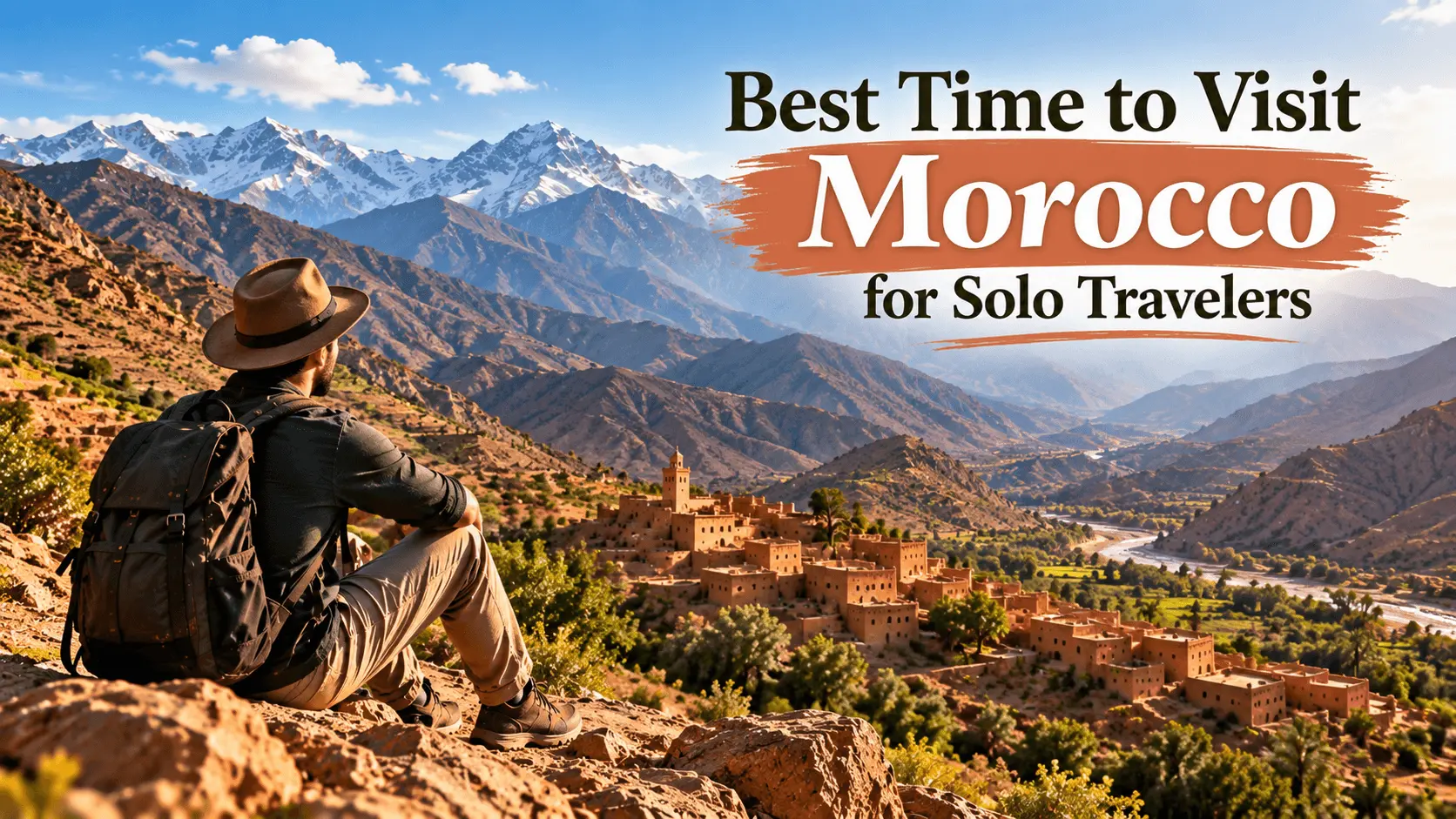
Spring is so popular for a very good reason: Marrakech and Fes are at a convenient distance for exploring the medinas, the Atlas Mountains remain green because of the winter rain, and the light is ideal for photography. Between late February and March the almond blossoms appear in the Anti-Atlas area, which is a pleasant extra if your route takes you to Tafraoute or the southern parts. The downside is that spring is also the busiest time for tourists, so the main attractions become more crowded and accommodation costs go up. If your trip focuses on Marrakech, Fes and the mountains, then spring is difficult to surpass.
Autumn, September to November
Autumn is almost as good as spring in terms of comfortable temperatures and fewer numbers, especially from October and November. Although September still has some residual summer heat in the inland areas, by October Marrakech is usually in the high 20s during the day, the Sahara drops to a pleasant temperature for both day and night, and the Atlas Mountains stay fully accessible for trekking. October is truly a strong month for booking desert camps since so many tourists come to the same conclusion, and it’s important to book in advance if you’re visiting the Sahara in October. By November the shoulder season begins properly, with lower prices, thinner crowds and weather that remains comfortable almost everywhere, although the first rains of the season start to appear, particularly in the north.
Summer, June to August
In summer the heat is severe, especially in the inland areas of Marrakech and Fes, and particularly in the Sahara, where daytime temperatures frequently go above 40 degrees and can reach even higher in July and August, the hottest part of the year. As a result, city sightseeing has to be limited to early morning and late evening. Nevertheless, summer is a good time to visit if your itinerary includes the Atlantic coast, Essaouira, Agadir, or Tangier, since the sea breezes make the weather much cooler and truly pleasant for swimming. The Atlas Mountains also provide a cooler, green retreat from the heat lower down. However, summer is not our top suggestion for a solo traveller who wishes to see both Marrakech and the desert in one trip.
Winter, December to February
Winter is undervalued and frequently ignored. In coastal areas and in Marrakech the daytime temperatures remain mild even though the nights do become properly cold, the nights in Marrakech usually falling to somewhere between 5 and 8 degrees. It is at this time that prices tend to go down and that the number of tourists at the major attractions decreases. The Atlas Mountains experience real winter snow and skiing is possible at Oukaïmeden from about December through March, which is an unexpected possibility if you like having a contrast on your trip. The Sahara remains surprisingly pleasant during the day, but the nights can drop close to freezing, so if your trip involves a desert camp it is important to pack for genuinely cold nights rather than thinking that Morocco always means hot weather. It should also be noted that prices rise significantly around Christmas and New Year, so if you are travelling during that period it is necessary to book well in advance.
Ramadan, Timing Varies Each Year
On the Gregorian calendar, Ramadan moves back by about ten to eleven days every year; in 2026 it will be roughly between mid-February and mid-March, coinciding with the beginning of spring. It is entirely feasible for a non-Muslim single traveller to visit during Ramadan, since daytime routines change and most local cafes and food stalls close or shorten their hours until sunset, although restaurants in the tourist areas of the medinas and riads generally remain open to cater to visitors. Hotels, attractions and transport keep their normal schedules. For those willing to try a different kind of experience, the evenings in Ramadan can in fact be a great and vibrant time to be in Morocco, with the atmosphere becoming increasingly lively after sunset. However, if you prefer to have full access to restaurants during the day and to experience things in the usual way, it is advisable to check the dates for the year in which you plan to travel and arrange your trip around that period.
Matching Timing to Your Route
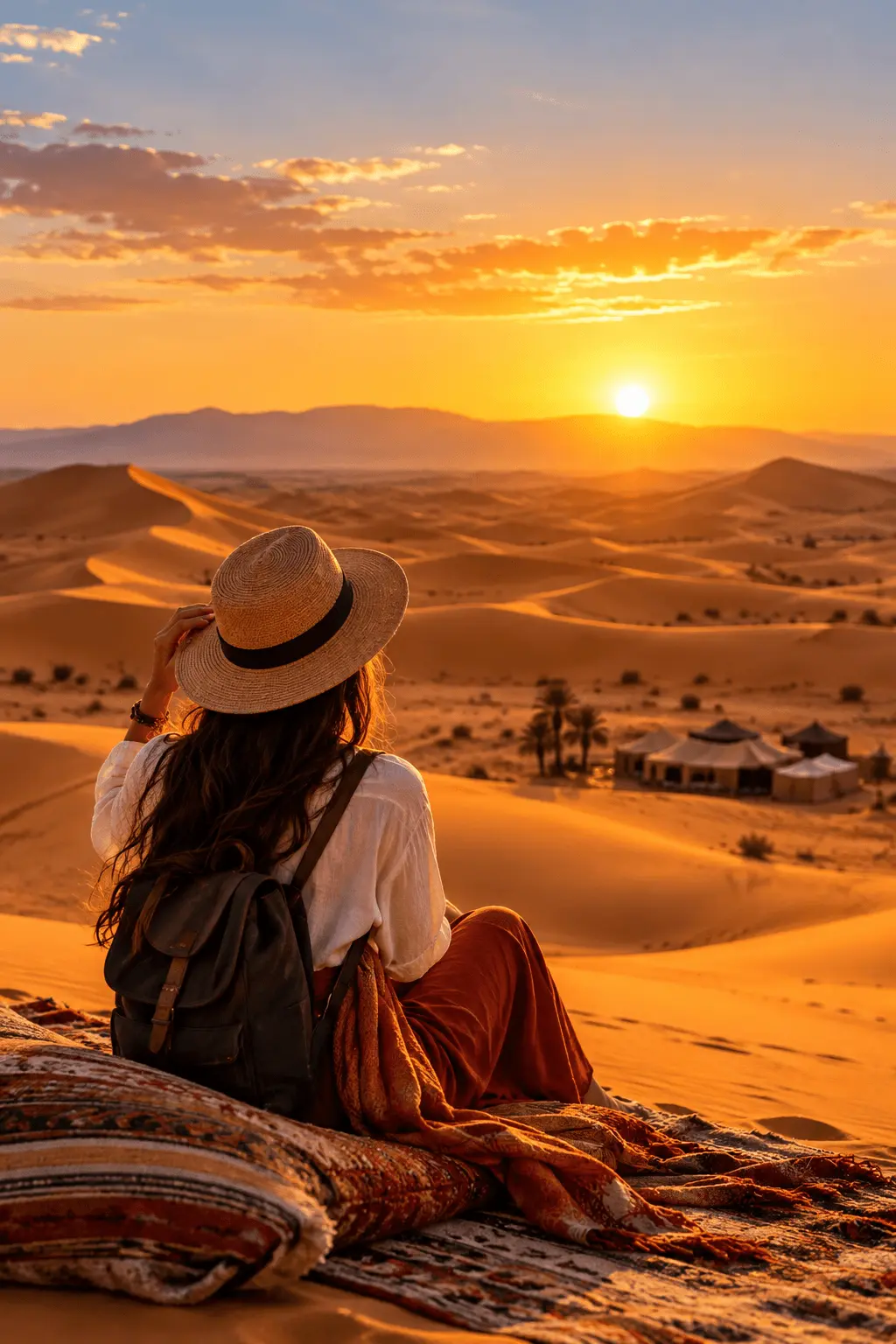
For a solo journey that is primarily concerned with cities and culture, both spring and autumn are excellent choices and winter offers a good alternative since it is less crowded. If your main interest is visiting the Sahara Desert, then travelling from autumn through to early spring will give you much more comfortable desert conditions than the severe summer heat, October and November in particular being very reliable. However, if you are attracted to coastal towns such as Essaouira or Agadir, summer does in fact become a truly good option because of the sea breeze, which reduces the heat.
A Note From Living Here
A rather surprising thing for many first-time visitors is the wide variation in temperature from one region to another and even within the same day. For example, a journey from Marrakech to the Sahara can go from a mild afternoon to a cold desert night in just 24 hours, which is why it’s important to pack in layers rather than choosing a single “right” season in general.
Quick Answers
October is usually named as the ideal month to visit Morocco, since the temperatures are pleasant in the cities, in the Sahara and in the mountains, although April and September are also very close contenders.
Isn’t Morocco too hot in the summer? Although inland cities and the Sahara become very hot, coastal towns and those at higher mountain elevations remain comfortable, so summer can still be suitable depending on the plan of your trip.
Will I be able to visit the Sahara Desert in winter? Yes, the days are generally pleasant, but the nights do become quite cold, so make sure to pack some warm clothing even if the daytime temperature remains mild.
Is it worth it to go on a trip during Ramadan? It offers a different yet often enjoyable experience, especially in the evening, although in the local neighbourhoods the choice of food during the day is more restricted, so it all comes down to the type of trip you’re looking for.
Morocco is mostly a dry country and the rain falls mainly in the north and along the Atlantic coast between November and February, there being very little rain in the south and in the desert at any time of year.