Grand Taxi vs Train vs Bus: Getting Around Morocco Solo
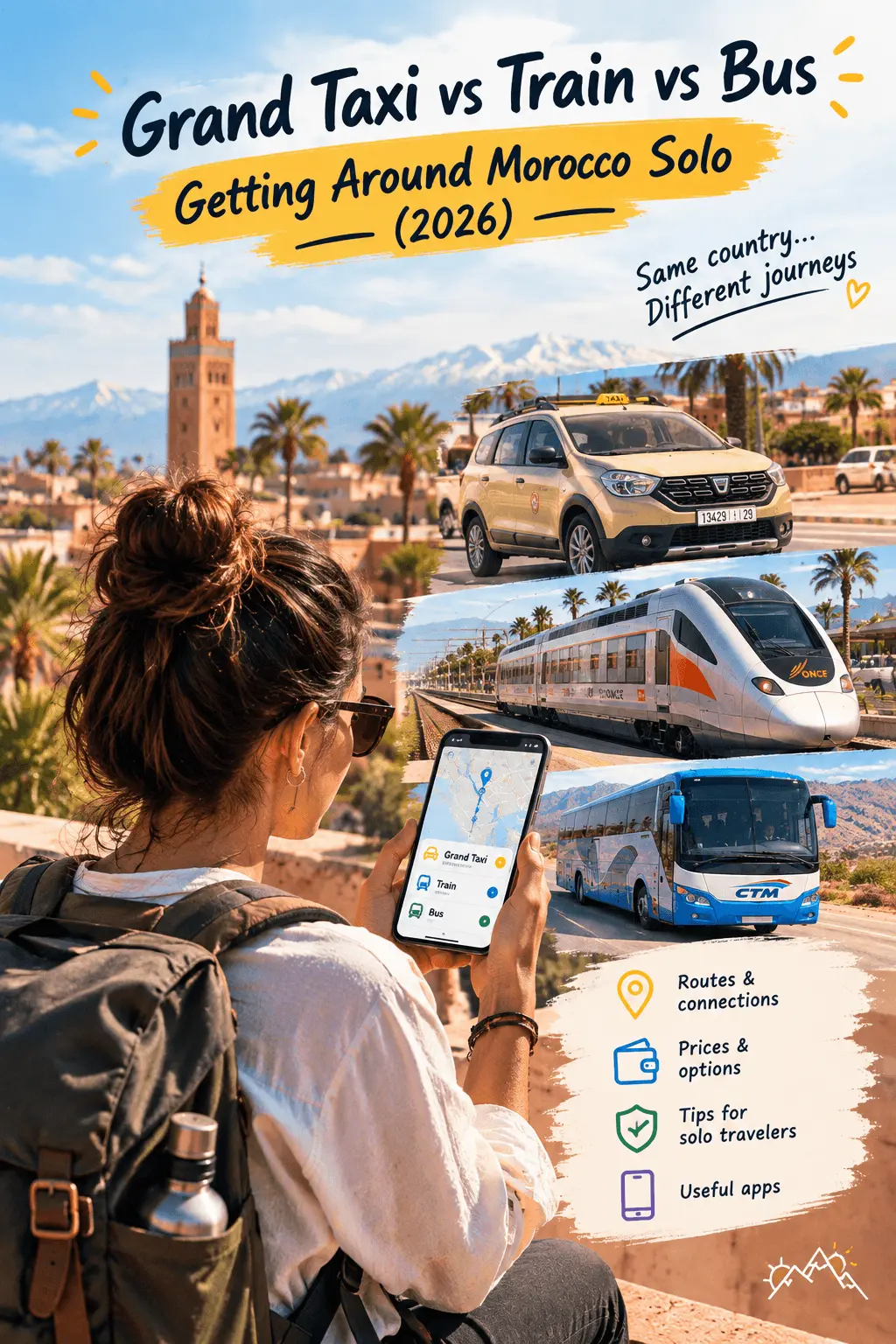
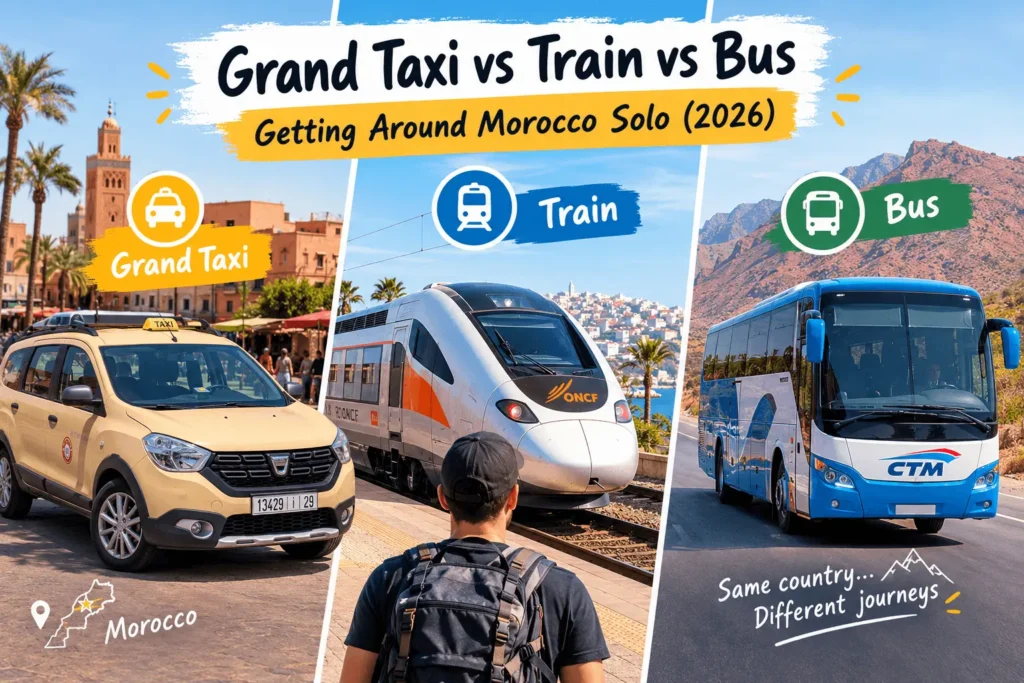
A rather comforting aspect of traveling alone in Morocco is that the transport system is in fact good and much cheaper than the majority of travelers anticipate. The issue isn’t really whether it’s possible to get from one place to another without being in a group or without hiring a car, since it absolutely is possible, but rather which of the options actually suits each individual section of your journey. Below is a comparison of the main alternatives.
Trains, the Comfortable Backbone
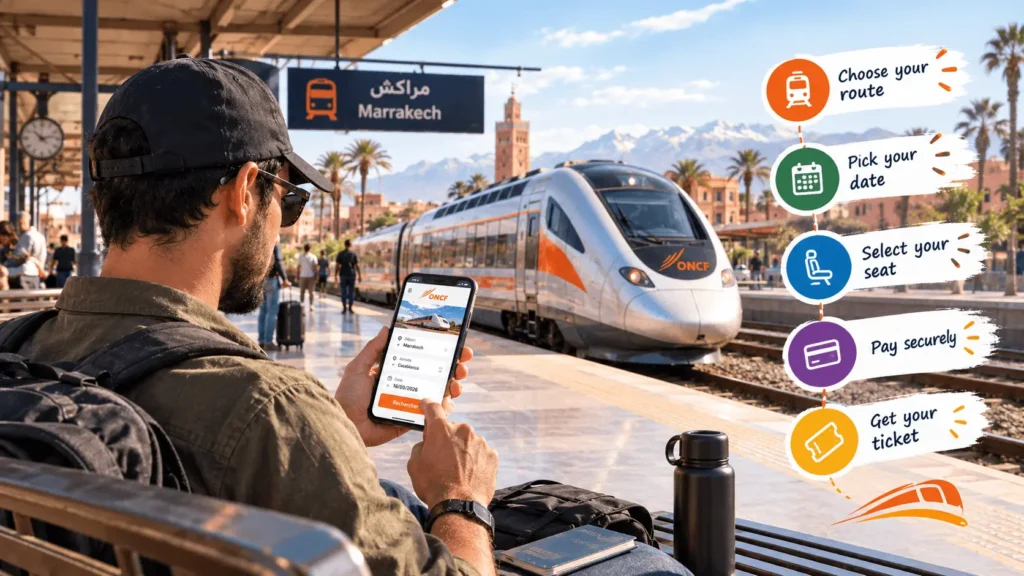
The rail system in Morocco, which is operated by ONCF, links the country’s major cities—Casablanca, Rabat, Tangier, Fes and Marrakech—and is always the most comfortable and reliable method of travelling between them. Africa’s only high-speed line, Al Boraq, takes just over two hours to travel from Tangier to Casablanca at speeds of up to 320 kilometres per hour, with first class providing more legroom and power outlets, while economy class is still comparable to that of a good European train. On the conventional network a second class ticket from Marrakech to Casablanca costs about 90 to 150 dirhams, and one from Marrakech to Fes, which is a longer journey, usually costs 200 to 350 dirhams. First class is only a small amount more expensive and is generally worth the extra cost for longer trips. For a single traveller, by far the simplest way to book a ticket is by rail, the seats are comfortable enough to work or read on, and it is a truly pleasant way to watch the country pass by.
The result is that the range of destinations covered is limited, since the trains only serve the major urban areas, and so if your journey involves Chefchaouen, Essaouira, the southern region, or the towns near the Sahara, you’ll have to use a bus or a long-distance taxi for at least part of the trip.
Buses, the Budget Friendly Workhorse
The two principal intercity bus companies in Morocco are CTM and Supratours, who operate modern, air-conditioned coaches with wifi covering places that the train service does not reach, such as Chefchaouen, Essaouira and the towns situated alongside the Sahara. Their fares are generally a bit less than those of the trains on similar routes. The various examples of prices indicate the extent of the range, with the journey from Marrakech to Essaouira costing between 80 and 100 dirhams, that from Casablanca to Chefchaouen lying between 160 and 180 dirhams, and the trip from Fes to Chefchaouen amounting to 75 to 100 dirhams. Supratours in particular has its schedules coordinated with those of ONCF trains, enabling you at times to book a single continuous trip that changes from rail to bus halfway through. It is worth booking a day or two in advance during holidays and the peak season since popular routes tend to sell out.
Grand Taxis, the Flexible Middle Ground
The grand taxis, which are the shared intercity taxis used in Morocco, are older Mercedes saloons in certain areas and more modern minivans in others, operating on set routes between towns and cities. Instead of paying per vehicle, you pay for each seat, and the taxi only leaves when it is full, although you have the option of paying for the empty seats left over, a local term for these being koursi, if you prefer to get in and go immediately without waiting. Prices vary according to route and are fixed for each one; for example, a popular route such as that from Marrakech to Essaouira costs between 70 and 175 dirhams per person depending on demand and the season. For a single traveler, grand taxis are particularly useful on routes where there is no train and where bus services are either limited or inconvenient, since they are generally quicker than buses as they have fewer stops. Before going to the taxi rank, ask your riad or guesthouse what the current rate is for your particular route, as this is the simplest way to prevent being given an inflated price typical of tourists.
Petit Taxis, for Getting Around Within a City
They are the small taxis which work only within the city and are coloured differently in each city. The cost for short journeys is usually between 10 and 30 dirhams and the drivers are legally obliged to use the meter, although tourists are at times encouraged to pay a flat rate. If you say “le compteur, afak” (meter please), this will settle most of these cases and, in the event that a driver still refuses, you should just go and get another taxi. Fares increase legally by about 50 per cent after 8 or 9 in the evening, a situation which is normal and not in itself a scam. One practical point to be aware of is that taxis are generally not allowed to enter the narrow streets of a medina, so you will generally be taken to the nearest gate, known locally as a bab, and then have to walk the rest of the way.
A New Option Worth Watching
In mid-2026 BlaBlaCar introduced its long distance carpooling service in Morocco, marking its first move into North Africa. The system links drivers who are already travelling with passengers who wish to share the cost of the journey, and even though the pricing and the coverage are still being developed, it is worthwhile checking whether the service covers your particular route, as it can offer fares that are lower than those of both bus and grand taxi services on busy routes.
Regarding hiring a car?
If you want to get to the Atlas Mountains, the gateway towns in the Sahara, or the smaller rural villages off the main roads, hiring a car gives you the greatest flexibility. However, there are some real drawbacks since fuel, tolls, and insurance all amount to a considerable cost, getting used to driving in cities proves to be an adjustment, and parking near a medina is actually very difficult because most of them are pedestrian-only areas. For a single traveler who is specifically aiming to reach the Sahara, taking a private driver or joining an organized desert tour—both of which include transport—is generally a more relaxed option than driving yourself over that section.
Putting It Together for a Solo Route
A common solution adopted by many people travelling alone is to take the trains between the major cities along your route—such as Marrakech, Casablanca, Fes and Rabat—while using buses or large taxis for all the places the rail system doesn’t cover, including Chefchaouen, Essaouira, the towns that serve as gateways to the desert, and small taxis for shorter journeys within each city after you have arrived. If you book your train tickets and CTM bus tickets a day or two in advance, especially during holiday periods, you will eliminate most of the last-minute stress.
Quick Answers
The cheapest method of getting around Morocco is by bus, especially with CTM and Supratours, while grand taxis come a little behind them when the schedule is more important than the cost.
Which is better for individual travelers in Morocco, the train or the bus? The trains are more comfortable and it is easier to book them for the routes between the main cities, whereas the buses are able to reach places that are not served by the rail network, such as Chefchaouen and Essaouira.
What is the way that a grand taxi operates? You pay on a per-seat basis at a grand taxi rank, which is generally located near the main bus station, and the taxi departs when it has reached full capacity, or you can pay for the other seats yourself in order to have it leave immediately.
Can taxis enter the medina? No, since medinas are generally restricted to pedestrians, small and large taxis have to drop off their passengers at the nearest gate and then you walk the rest of the way to your riad.
Is it necessary to book transport in advance when in Morocco? It’s advisable to book train and CTM bus tickets a day or two in advance, particularly during holidays and the peak season, even though grand taxis usually do not require advance booking.