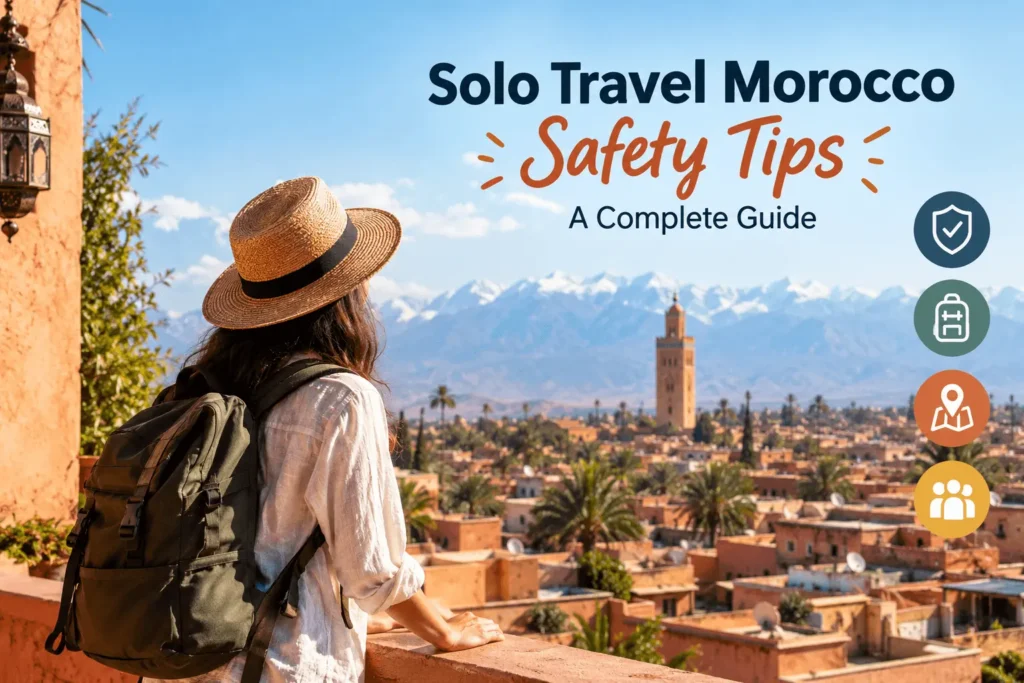
Solo Travel Morocco Safety Tips: A Complete Guide
We have already dealt with various safety issues elsewhere on this site, such as what to wear, the common scams in Marrakech, and safety measures that are specific to women and men. This article brings together all the other aspects, namely the practical and rather less exciting basics which ensure that a solo trip goes smoothly, including information on health, emergencies, valuables, and the daily habits that quietly stop the majority of problems before they occur.
The Overall Picture
Morocco is consistently one of the safest countries in Africa for tourists, and the most recent independent safety ratings have positioned it approximately 42nd globally, topping the list for the continent. Its homicide rate is notably lower than that of the United States and is similar to that of Portugal. The US State Department has assigned Morocco Level 2, which means travellers should exercise increased caution, the same level given to France, Germany, the UK, and Spain, indicating a general need for vigilance rather than pointing to any particular heightened risk. The straightforward conclusion is that it is safe to travel in Morocco on your own, and the actual risks one should be prepared for are practical not dramatic.
Save These Numbers Before You Land
The emergency numbers in Morocco are 190 for the police, 150 for the ambulance, and 15 for the fire services; they can be used from any phone, even one that does not have a local SIM card, so it’s a good idea to save them before you board your flight. Additionally, when you arrive in each new city it is advisable to find out the position of the nearest embassy or consulate for your country as well as that of a well-known private clinic, rather than having to search for one when an emergency actually arises.
Water and Food, Where Most Trip Disruptions Actually Come From
The straightforward, plain truth is that traveler’s diarrhea — not crime — is the one thing most likely to disrupt a trip to Morocco. It is estimated that a significant number of tourists visiting North Africa suffer from it during their first two weeks, mostly due to drinking water and food rather than anything else. Make sure to drink only bottled water throughout your visit since it is inexpensive and can be found everywhere, and always check that the bottle’s seal is intact before consuming it. When it comes to drinks, avoid the ice at small, casual places even though it is usually safe at hotels and in well-known restaurants. As for food, freshly prepared, hot dishes such as tagines, couscous, harira and grilled meats are consistently the safer option, and it is better to choose the busy food stalls with a high turnover rather than the quiet ones, because the food is less likely to have been left out for a long time. The popular fresh-squeezed orange juice carts around Jemaa el Fnaa are a real attraction in Marrakech, and similarly, at those carts the ones that are busiest and have a constant turnover are the safer choice.
Vaccinations are not required in order to enter the country, though travel health professionals usually recommend Hepatitis A, Hepatitis B, Typhoid, and keeping up to date with routine boosters such as Tetanus, so it’s worth having a talk with your doctor or a travel clinic a few weeks prior to your departure.
Healthcare and Travel Insurance
The major cities, such as Casablanca, Marrakech and Rabat, have good private clinics and hospitals, some of which have staff who speak English, and are well equipped to handle most non-emergency matters. Medical care in areas outside these cities, especially in the Atlas Mountains or the Sahara, is much more limited, so if your travel plans involve trekking, staying in desert camps or visiting remote areas, travel insurance which provides coverage for emergency medical evacuation is truly worth having, not just a convenient extra. You should also look at the detailed provisions of your policy since standard travel insurance doesn’t always automatically include activities such as camel trekking, sandboarding or trekking above about 2,500 metres, and it’s advisable to confirm that this coverage is included or to add a supplement before you go in order to avoid serious problems later.
Protecting Your Valuables
The realistic risk of property crime in crowded medinas and markets is pickpocketing and opportunistic theft, rather than anything more serious. To deal with this, you should use a cross body bag with a zip that closes, store your phone in the front pocket instead of the back one, and stay a bit more alert when in dense crowds such as Jemaa el Fnaa in the evening. It is important to keep separate digital and physical copies of your passport, insurance policy and any bookings, with the originals, and it may be worth considering a portable door lock or a small travel alarm for extra reassurance when staying in budget accommodation.
Getting Around Safely
Use only licensed petit and grand taxis, make sure the meter is on or agree on a price in advance, and do not take unmarked, unofficial vehicles when getting taxis near tourist areas. When you are renting a car, remember that the driving conditions and habits are different from those you are used to at home, especially in city driving, which will require some getting used to, and hiring a private driver is a truly good idea for longer journeys such as from Marrakech to the Sahara if you prefer not to navigate yourself.
Weather and Seasonal Awareness
Because heavy rain, flooding and snow in the mountain areas of Morocco can all lead to driving routes being disrupted and tour schedules being affected with very little notice, it makes good sense to include some flexibility in a winter itinerary—especially if the plan involves the Atlas Mountains—and it is worth putting in the small amount of effort to check local conditions a day or two before winter travel.
Areas Worth Avoiding
The areas near Algeria and Western Sahara are still politically sensitive and are generally not recommended for tourists, but this has no impact on the country’s main tourist routes, which include Marrakech, Fes, Chefchaouen, the Sahara area around Merzouga, and the Atlas Mountains since these are all well removed from those regions.
A Note From Living Here
Almost all the items on this list are truly routine, belonging to the sort of preparations you’d make for any journey abroad rather than being something specific to the reputation of Morocco. The main point we’d like you to take away is that you should prepare much more for an upset stomach than for danger, and the rest of your trip is likely to proceed as smoothly as that of the millions of tourists who visit here each year.
Quick Answers
Is it safe to drink tap water in Morocco? No, during your visit you should take bottled water, since it is cheap and easily available, just make sure the seal is still intact.
What are the emergency numbers in Morocco? 190 for the police, 150 for the ambulance, and 15 for the fire service; all the numbers are free to use and continue to operate even if you do not have a local SIM card.
Is travel insurance necessary for Morocco? Yes, especially if you are going to the Atlas Mountains, the Sahara, or engaging in adventure activities, since medical care outside of major cities is limited.
The most common health problem encountered by travellers in Morocco is traveller’s diarrhoea, which is much more frequent than any safety incident and is mostly preventable by drinking only bottled water and eating food that has been freshly cooked and served hot.
Yes, are there any places in Morocco that tourists should avoid? The areas near the border with Algeria and those in Western Sahara are generally advised against, even though these regions lie well outside the main tourist route that most single travelers actually take.