How to Bargain in Moroccan Souks, Without Overpaying
Bargaining is no oddity in the Moroccan souks; it forms the complete system and vendors really do expect it. If the thought of haggling puts you off, you are not alone since most first-time visitors feel precisely the same before they try it for the first time and most end up being surprised by how much fun the negotiation actually is. The following is a practical and honest account of how the process actually works.
Calibrate Before You Haggle
It is really worthwhile making a visit to one of the government-operated Ensemble Artisanal stores before you start exploring the souks, since these cooperatives offer quality crafts at clearly stated and fixed prices. Although you won’t be able to get a bargain there, you’ll have a good understanding of the actual cost of items, which in turn makes the subsequent negotiations much less stressful because you’ll already know what a reasonable price should be rather than having to guess.
The Actual Starting Point
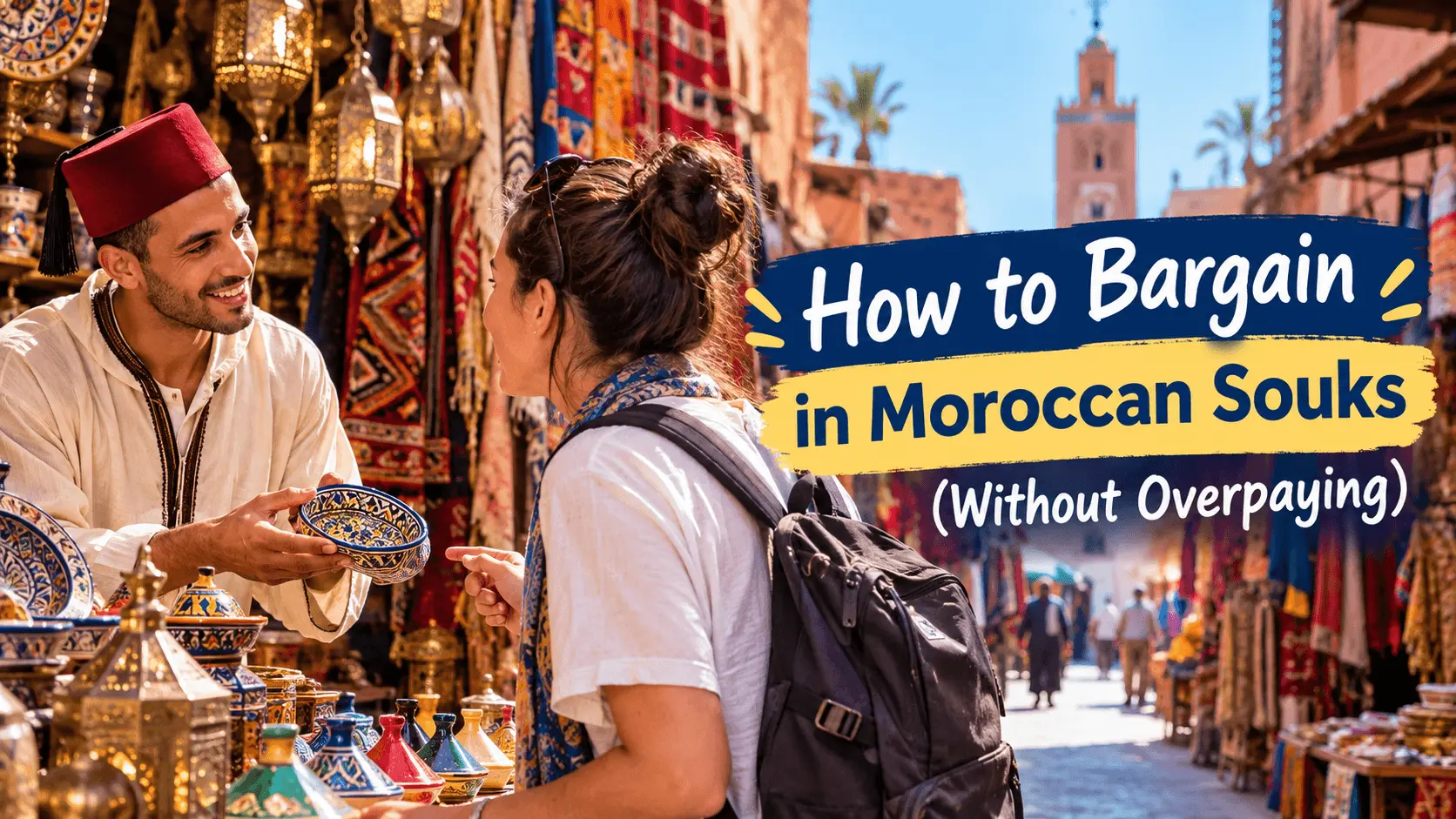
Take the opening price that a vendor sets as merely a starting point, not as an actual figure. The uniform advice given by experienced sellers and experts is to respond at somewhere between 40 and 50 per cent of that opening price, with some of them suggesting they should take one quarter of the initial amount in cases where the opening bid is particularly high; expect the vendor to laugh or show surprise at this point, for this reaction is just part of the routine and not an indication that you have offended them in any way. After that, make your successive offers by increasing them gradually in small amounts rather than going straight to a figure near their requested price, each of your counteroffers being only slightly higher than the one before, in order to leave room for the negotiation to take place rather than rush to a final decision.
Keep It Friendly, This Is the Whole Point
Bargaining in Morocco involves as much of a social element as it does a business transaction, since the vendors really do enjoy the giving and taking, and if you approach the situation with a smile, a bit of light chat, and a sense of humour you will usually achieve a considerably better result than viewing it as an adversarial affair. The locals engage in haggling as well, since this is not some kind of ritual for tourists but rather the way business is conducted in this area, so there is no need to feel embarrassed about doing it.
Know When to Walk Away
If you genuinely think that the price is not right, then thank the seller sincerely and begin to walk away; this is a completely normal and expected stage in the process and by no means an impolite action, and it is quite common for the seller to call you back with a improved offer after you’ve taken a few steps. If they don’t do so, you’ve lost nothing since similar items are almost always to be found at another stand nearby and it really does give you a good understanding of the current rate for what you’re looking for to go and talk to a few different sellers before making a decision.
A Few Phrases Worth Learning
You don’t need to know fluent Darija in order to negotiate effectively, but a few simple phrases do help to build up a good relationship and show respect. To ask for the price, you say “Bshhal?”, to indicate that something is too expensive you say “Ghali bzef”, and to request a small price reduction you say “Nqss shwiya”. Whether or not the negotiation ends well, a simple “shukran” as a thank you will warmly conclude the exchange. Generally speaking, most sellers are genuinely multilingual and will be happy to carry on the conversation in English or French if that is more convenient for them, but the fact of using just a few Darija words has a tendency to change the overall tone of the interaction.
Cash and Bundling, Two Practical Advantages
The advantage of paying with cash is that most transactions in the souk are conducted entirely in cash, and having exact change rather than just large bills actually improves your position. When you wish to buy more than one item, it’s better to negotiate the price for them all together rather than deal with each item separately, since the vendor is often willing to give you a significantly better combined price—typically amounting to 20 to 30 per cent off the total you would pay if you bought the items individually—because they prefer to deal in larger volumes with a single sale rather than going over the price again and again for individual items.
Timing Matters More Than You Might Think
Morning is actually the optimal time for negotiating, since many shopkeepers believe that their first sale of the day will bring good luck, a notion locally known as baraka, and therefore are considerably more inclined to give a favourable price early on in order to secure it. Whenever possible, it is better to go to a souk shortly after it has opened than during the heavier afternoon crowds.
What to Watch Out For
It’s worthwhile to be aware of a few common problems before making a purchase. For example, there is fake saffron, dyed safflower being sold as if it were the real article, machine-made carpets marketed as if they were handwoven, argan oil that has been diluted and sold by informal street vendors, and fake silver jewellery, which can be checked using a magnet since a genuine piece of silver will not be magnetic. The easiest way to avoid all of these is to buy from well-known shops or from recognised cooperatives rather than from the first person you meet on the street.
A Note From Living Here
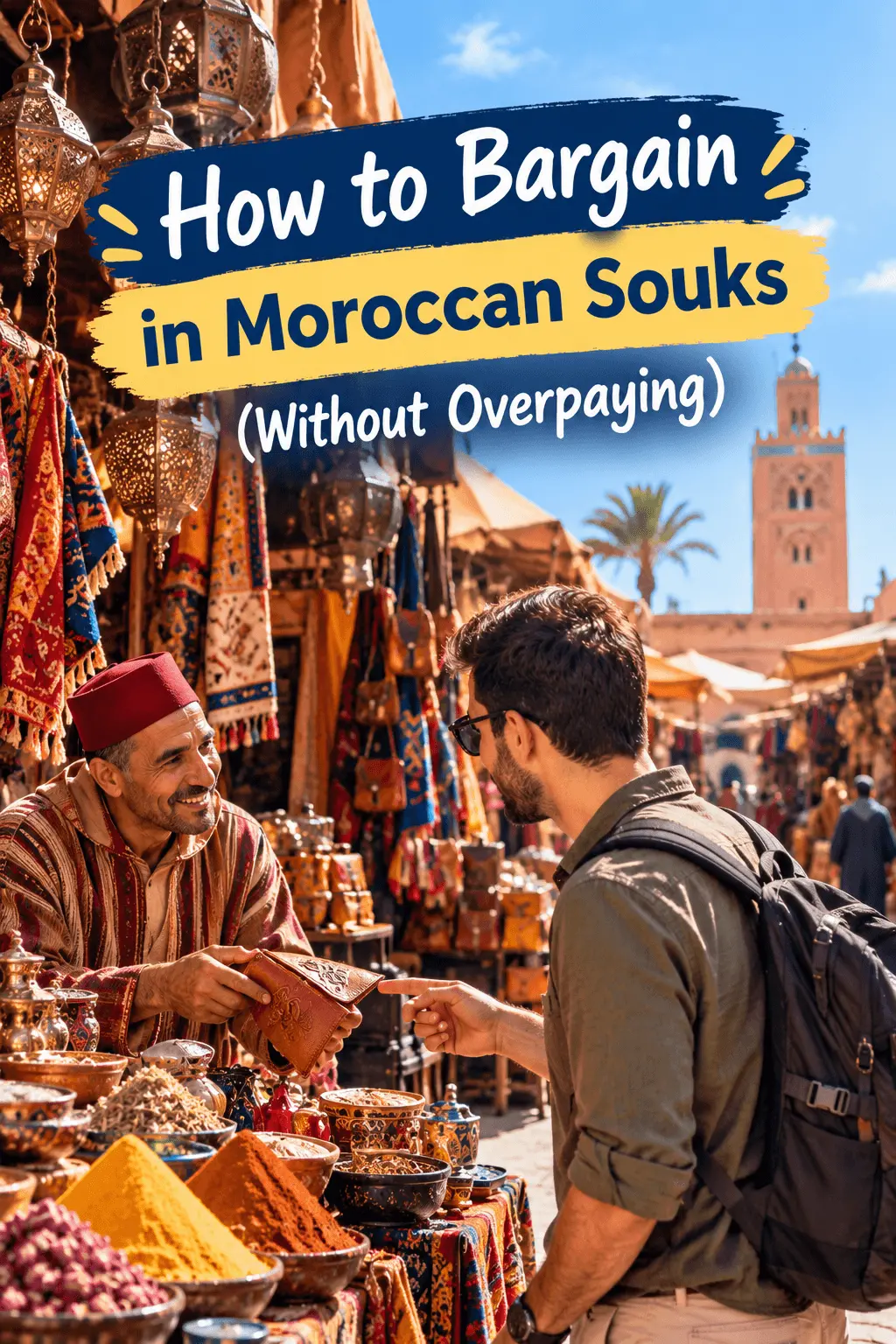
The aim in this situation is not to get as much as possible from the vendor, but rather to reach a reasonable price for both of you and at the same time enjoy the exchange, including the mint tea and the conversation. After you have agreed on a price, stick to it since breaking off the deal or restarting the negotiations afterwards is regarded as truly bad manners and will quickly spoil the interaction.
Quick Answers
When setting your first bid in a Moroccan souk, begin with about 40 to 50 percent of the vendor’s initial price; they will probably be surprised, since that reaction is normal in the situation, and then increase your offer gradually from that point.
Is haggling really expected in Morocco? Yes, in the souks and when it comes to unmetered transport, bargaining is a normal and expected part of the culture and not something that is only done by tourists since even locals do it.
What will happen if I decide to leave during the negotiations? It’s a completely normal thing to do, and the vendors will often ring you up again with a better price if they don’t, similar items are generally to be found elsewhere in the souk.
Is it necessary for me to speak Arabic in order to negotiate effectively? Not really, since a few simple Darija expressions such as bshhal, how much, and shukran, thank you, do help establish a good relationship and are actually appreciated, even though the majority of the negotiation takes place in English or French.
Is it rude to haggle vigorously in Morocco? By no means, provided that you do so in a friendly and respectful manner, since haggling is seen as a pleasant social interaction, it is actually the excessive aggression or dismissiveness that gives a bad impression, not the act of negotiating.