What to Wear in Morocco as a Solo Woman
This is one of the most commonly asked questions, and the simple answer is more relaxed than most people expect, even though it is also more complex than can be expressed in one sentence. Even though there is no legal dress code for tourists in Morocco and you won’t be stopped or fined for the way you dress, the clothes you pick do affect the amount of attention you draw and the comfortable you feel while walking through medinas, souks, and smaller towns, so it is important to consider the matter rather than either packing an excessive amount of modest clothing when you never actually needed to or packing too little and feeling out of place on the first day.
The General Rule of Thumb
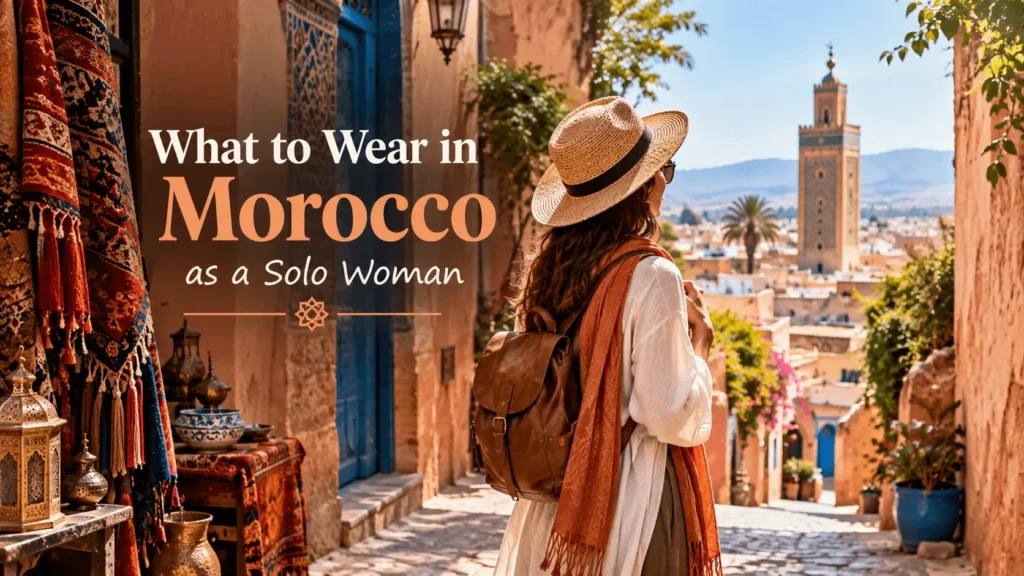
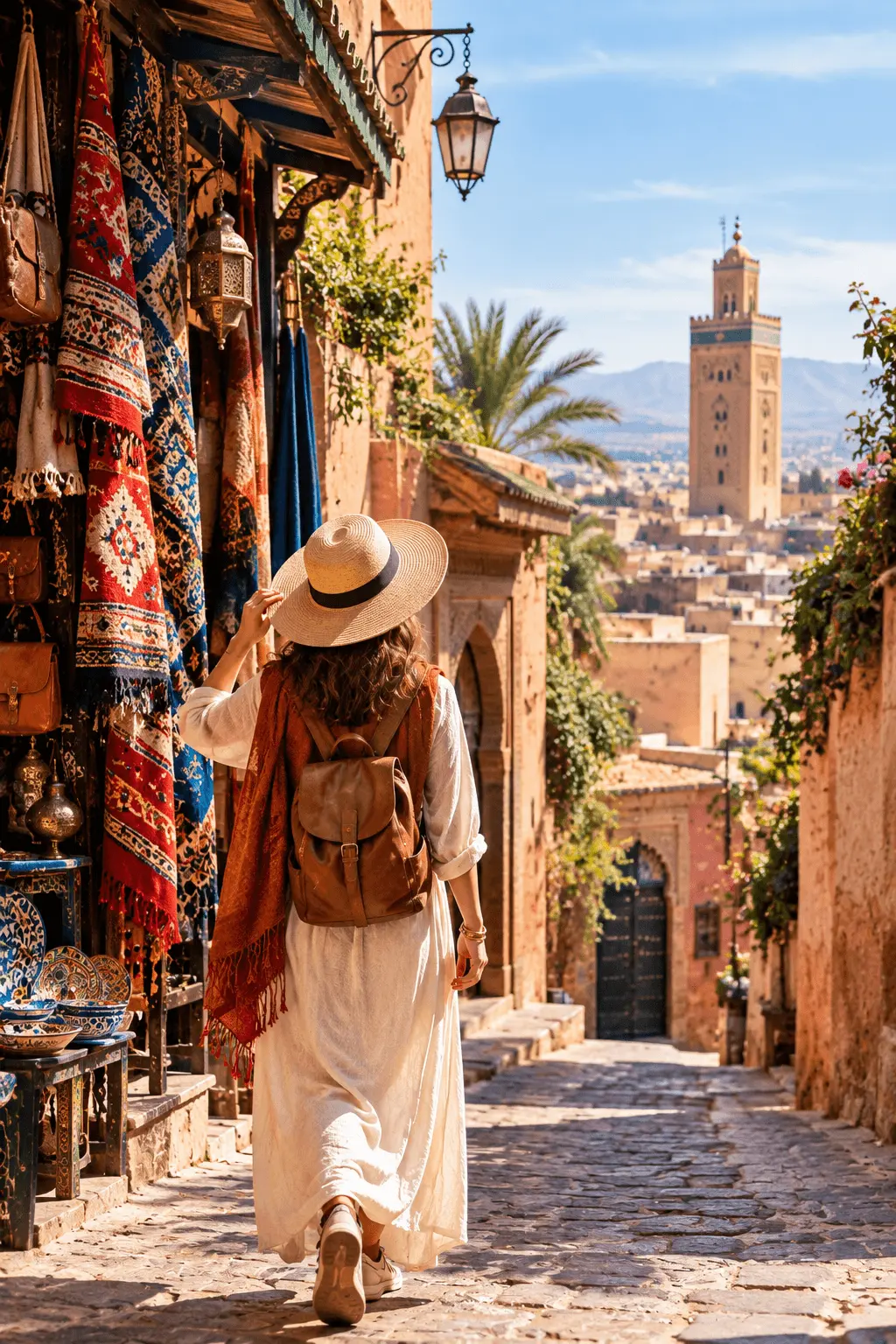
In both cities, in the older towns and in rural areas the recommendation to cover your shoulders and knees is by far the most common one, and this is because it greatly reduces unwanted attention while at the same time seeming respectful without requiring complete coverage. There is no necessity to cover your hair and you need not wear long sleeves in all situations. Instead, choose loose, breathable clothes that are a bit longer than you normally wear at home, as this type of outfit will cope with most of the situations you are actually likely to meet.
Cities and Medinas
In cities like Marrakech, Fes and Rabat the suggestion is most applicable on a day-to-day basis. Maxi skirts and dresses are very suitable for these places since they are cool and comfortable for walking and are entirely appropriate. Loose trousers made of linen or cotton are just as good, palazzo-style pants being better than tight leggings both from a cultural point of view and in relation to the heat. Tunic tops or more relaxed shirts which reach down to the hips match well with either of these. A light scarf or pashmina is indeed one of the most useful items to take with you as it can be used to cover the shoulders at once, to stay warm in the evening, to keep out dust and wind, and in the rare case when suddenly more coverage seems preferable.
It should be pointed out that the cities vary in this regard; Fes is generally regarded as the most conservative of the imperial cities and you will notice more local women covering their heads there than in Marrakech, which is far more diverse and used to having tourists. In Casablanca and Rabat you will see the widest range, with jeans, dresses, blazers, hijabs and traditional djellabas all being present in the same café. Even though this has no impact on what you personally should wear as a visitor, it does explain why the atmosphere can appear different in one city from another during the same trip.
By the way, shorts are generally acceptable in tourist areas and coastal towns, even though they do draw a bit more attention in traditional medina districts and rural villages, so it’s advisable to keep this in mind rather than treat it as an absolute rule.
The Coast and Resort Pools
In Essaouira, Agadir and at the hotel pools there is no dress code at all. At beach clubs, in the resort pools and in coastal areas swimwear is completely normal, just as you would see everywhere else. It’s advisable to have a light cover-up when you are going to and from the water, though it is not essential.
Visiting a Mosque
In Morocco most mosques are closed to non-Muslim visitors, although there is one well-known exception, the Hassan II Mosque in Casablanca, which gives guided tours to members of other religions. When you visit, you must dress in a modest way by covering your shoulders and knees and you should take a scarf with you since women are required to cover their heads inside. You also have to wear shoes with closed toes.
The Sahara Desert
In fact, desert dressing has to take into account two distinct problems: the heat during the day and the cold at night, and it’s necessary to pack clothing for both situations rather than just assuming that deserts are hot. A long-sleeved, breathable tunic or shirt really should be included, since it offers protection from the direct sunlight for several hours when you’re trekking on camels or wandering over the dunes. A scarf similar to a keffiyeh which wraps around the face is useful when in windy, sandy areas. Rather than wearing flip-flops, it’s better to choose sturdy sandals or closed shoes if you’re walking on the dunes. Once the sun has set, desert camps can become quite cold, the temperature sometimes falling close to freezing during the cooler months, so having a suitable warm layer for camping overnight is not something you can do without. If camel riding is part of your plan, it’s a good idea to wear long trousers even if it’s hot, because wearing shorts against a saddle for a long ride is in fact an uncomfortable situation.
The Atlas Mountains
The same reasoning applies here, since warm days are just as likely to give way to cold evenings, particularly at higher elevations, so it is more important to have a packable warm layer and sturdy, closed shoes for difficult terrain than it is to concern oneself with any particular fashion choice.
Hammams
In a traditional hammam a sarong or kess is generally provided, and in those hammams which are more oriented towards tourists swimwear may be worn if you prefer to do so the entire time. It is advisable to take your flip flops with you since the floors are wet.
A Note on Fabric
Linen and cotton are in fact the best option here because synthetic fabrics have a tendency to trap heat and thus become uncomfortable in Morocco’s dry and often strong sun, especially from spring to autumn.
Evenings and Riad Dinners
It is normal to have casual dinners in Riad and in such situations everyday daytime clothing is quite appropriate. When you wish to go to a more upscale restaurant in either Marrakech or Casablanca, smart casual is the preferred choice, even though you do not need to wear anything very fancy, just a slightly more put together version of the clothes you have already been wearing during the day.
A Note From Living Here
It’s not a matter of trying to blend in or of having people tell you what to wear; on the contrary, it is a fully practical solution which most independent women who have made the journey consider worthwhile, since it results in less unwanted attention, more warm dealings with the local people, and, to be honest, fits the actual climate better than the kind of clothes you would normally pack from home.
Quick Answers
Is it necessary for me to cover my head in Morocco? No, elsewhere in the country you have no need to cover your hair though it is still advisable to have a scarf for that occasion.
Can I wear shorts in Morocco? Yes, particularly in tourist areas, resorts, and coastal towns, though longer trousers or skirts are more comfortable and draw less attention in traditional medinas and in rural areas.
Is it acceptable to wear swimwear in Morocco? Yes, it is entirely normal in beach clubs, in resort pools, and in coastal areas like Essaouira and Agadir.
When in Morocco and you want to visit a mosque, what should you wear? With the exception of the Hassan II Mosque in Casablanca, almost all mosques are closed to non-Muslims and it is expected that men and women will both wear modest clothing, covering their shoulders and knees, particularly women who should cover their heads.
The most useful item to take with you is a light scarf or a pashmina because it at once covers the shoulders, adds extra warmth in the evening, and protects against both the sun and dust, all with just one lightweight item.